
Sublimation vs DTF Printing — Which is Better for Your Business in Kenya?

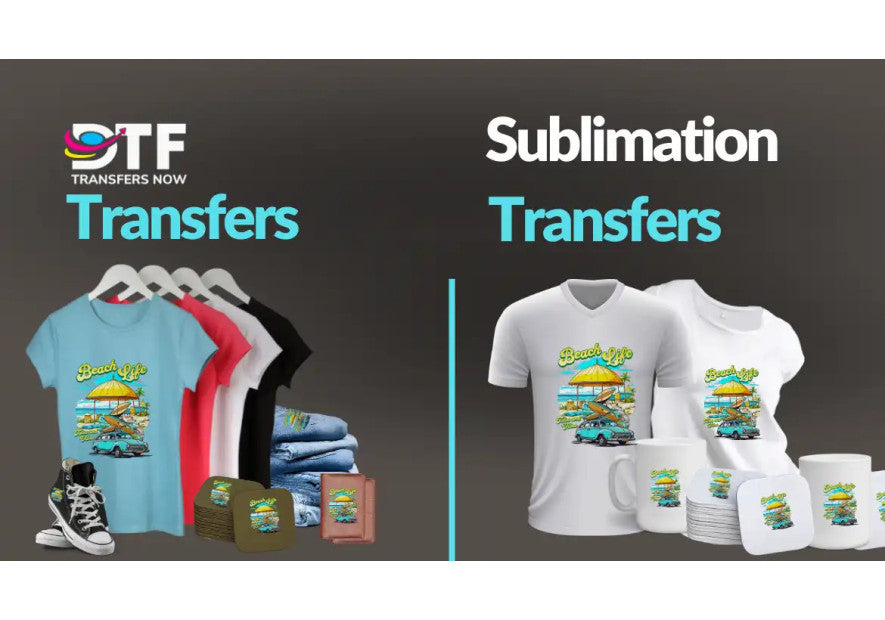
If you are planning to start a custom printing business in Kenya, at some point someone is going to ask you: “Are you doing sublimation or DTF?” Both are popular. Both produce high-quality, full-colour prints. But they work completely differently and are suited for different types of businesses.
This article will break down the real differences between sublimation and DTF printing — so you can decide which one makes more sense for your situation in Kenya.
What is Sublimation Printing?
Sublimation is a process where special inks are printed onto sublimation paper and then transferred onto a substrate using heat and pressure. The ink turns into a gas under heat and permanently bonds with the fibres of the material. The result is a print that is literally embedded into the fabric — it will never peel, crack, or fade.
However — and this is the critical part — sublimation only works on polyester or polyester-coated materials. It also only works well on white or very light-coloured fabrics. On a black T-shirt? Sublimation will not work at all.
What is DTF Printing?
DTF (Direct-to-Film) printing prints your design onto a PET film, applies adhesive powder, cures it, and then transfers it onto fabric using a heat press. Unlike sublimation, DTF works on virtually any fabric — cotton, polyester, nylon, blends, canvas, denim — and on any colour including black.
At Vignette Printers, our DTF printers range from the compact 30cm machines perfect for custom apparel startups to the high-production 60cm models for established print shops.
The Key Differences
| Feature | Sublimation | DTF |
|---|---|---|
| Fabric Types | Polyester only | Any fabric |
| Fabric Colours | White / light only | Any colour including black |
| Print Feel | Soft — embedded in fabric | Slight texture on top |
| Durability | Excellent — never peels | Very good — wash resistant |
| Hard Goods | Yes (mugs, plates, phone cases) | Limited |
| Setup Cost | Lower | Slightly higher |
| Fabric Versatility | Very limited | Extremely versatile |
Which is More Popular in Kenya Right Now?

Honestly, both are popular but for different markets. Here is what we see on the ground:
Sublimation dominates in:
- Sports jersey printing — polyester jerseys are perfect for sublimation
- Mug and promotional item printing — mugs, plates, phone cases, keychains
- Flags, banners, and soft signage
- School and corporate uniforms where the fabric is pre-specified as polyester
DTF dominates in:
- Custom T-shirt printing — especially the popular 100% cotton tees
- Dark-coloured garments — hoodies, jackets, caps
- Mixed fabric orders where you don’t know the fabric content
- Small batch custom orders — one piece is as easy as 100
Can You Do Both?
Absolutely — and many successful print shops in Kenya do both. The combination gives you the widest possible market coverage. You can use your sublimation printer for jerseys and mugs, and your DTF printer for everything else.
If you are just starting out with limited capital, we recommend starting with DTF because it gives you the most flexibility across fabric types and garment colours.
What About the Heat Press?
Both sublimation and DTF require a heat press. For sublimation jerseys, you ideally want a roll-to-roll heat press for continuous fabric printing or a large flatbed press. For mugs, you need a mug press specifically. For DTF and general garment printing, a good A2 or A1 flatbed heat press covers most needs.
Our Recommendation
If you have a specific niche — for example, you are already printing jerseys for football teams — sublimation is your best friend. The prints are permanent, the quality is unmatched on polyester, and your operating costs are lower.
If you want a machine that can handle anything that walks through your door — cotton tees, dark hoodies, denim, mixed fabric — go with DTF. It is more versatile and opens you up to a much bigger market.
👉 Browse our full range of sublimation and DTF printers or WhatsApp us and we will help you choose what is right for your business.