
Heat Press Machines in Kenya — A Beginner’s Complete Guide for 2026
May 5, 2026 — Charles
If you are just getting into the printing business in Kenya, one of the first machines you will hear about is the heat press. It is one of the most versatile, affordable, and in-demand pieces of equipment in the industry. With a good heat press and the right consumables, you can print T-shirts, mugs, caps, plates, phone cases, and much more — all from a space no bigger than a small room.
But with so many types of heat presses available, knowing which one to start with can be confusing. This guide is written specifically for beginners in Kenya — someone who is either just getting started or thinking about adding heat transfer to their existing business.
What Does a Heat Press Actually Do?
A heat press applies heat and pressure to transfer a printed design onto a substrate — typically a garment, mug, plate, or cap. It works with several transfer methods including:
- DTF transfers — printed on a DTF printer and transferred using heat
- Sublimation transfers — printed on sublimation paper and transferred onto polyester
- Heat transfer vinyl (HTV) — cut on a vinyl plotter and pressed onto fabric
- Ready-made transfers — pre-printed transfers bought from suppliers
At Vignette Printers, we stock a full range of heat transfer vinyls and DTF films and inks compatible with all our heat press machines.
Types of Heat Press Machines
1. Flatbed Heat Press
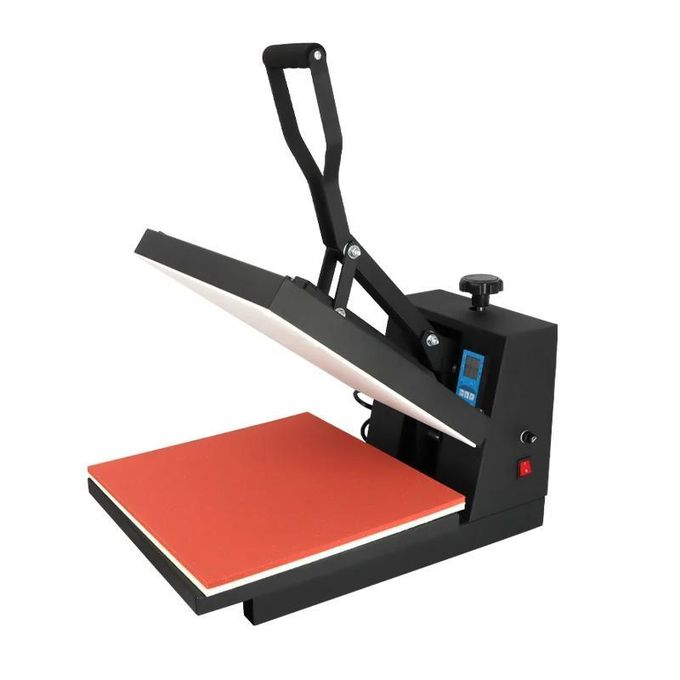
The most common type. A flat heated platen presses down onto flat garments — T-shirts, bags, aprons, cushion covers. Available in A3 (38×38cm), A2 (40×60cm), A1 (60×80cm), and A0 (80×100cm) sizes. For beginners, we recommend starting with the A2 flatbed heat press — it is big enough to handle most garment sizes but compact enough for a small workshop.
2. Combo Heat Press (8-in-1 or 15-in-1)
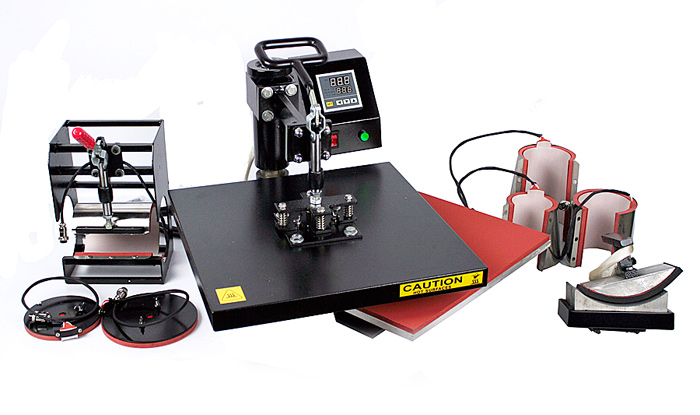
This is the best option for someone who wants to offer the widest range of products from day one. Our 8-in-1 combo heat press comes with interchangeable platens for T-shirts, mugs, caps, plates, shoes, and more. The 15-in-1 combo heat press adds even more platens including phone cases and puzzles. Perfect for a gift shop or personalisation business.
3. Mug Press
Specifically designed for printing on cylindrical mugs using sublimation. Very popular in Kenya for corporate gifts and souvenir shops. Our single station mug press is great for small volumes while the 5-station mug press is for high-volume production.
4. Cap Press
A curved platen designed specifically to press designs onto caps and hats. The curved surface ensures even pressure across the structured shape of a cap — something a flat press cannot do properly. Our cap press machine works with DTF, sublimation, and HTV.
5. Pneumatic Heat Press
For high-volume operations. The press opens and closes automatically using air pressure, eliminating operator fatigue during long production runs. Our pneumatic heat press in A2 and A3 sizes is ideal for busy print shops printing 200+ pieces per day.
What Temperature and Time Settings Do You Use?
This is one of the most common questions from beginners. Here are standard settings for Kenya:
| Transfer Type | Temperature | Time | Pressure |
|---|---|---|---|
| DTF Transfer | 160°C – 165°C | 10 – 15 seconds | Medium |
| Sublimation (polyester) | 190°C – 200°C | 40 – 60 seconds | Medium |
| HTV Vinyl | 150°C – 160°C | 10 – 15 seconds | Medium-High |
| Mug sublimation | 190°C – 200°C | 180 – 240 seconds | Firm |
| Cap sublimation | 190°C | 50 – 60 seconds | Medium |
Note: These are starting points. Always test on a sample first, especially when using a new batch of transfers or working with a new fabric type.
Common Mistakes Beginners Make
- Too much pressure — over-pressing flattens fabric fibres and can distort the garment. Start with medium pressure and adjust
- Not pre-pressing the garment — always do a 3-second pre-press to remove moisture and wrinkles from the fabric before applying your transfer
- Wrong temperature for the fabric — synthetic fabrics like nylon can melt at high temperatures. Always know your fabric content
- Peeling too fast or too slow — DTF transfers are usually hot-peel (peel immediately). Sublimation is cold-peel (wait to cool). Check your transfer supplier’s instructions
How Much Can You Make with a Heat Press?
A heat press business in Kenya can be incredibly profitable because the setup cost is low but the demand is high. Here is a quick income estimate:
- Custom T-shirt (with DTF transfer): Cost KSh 80 – 120, sell at KSh 350 – 600
- Personalised mug (sublimation): Cost KSh 150 – 200, sell at KSh 500 – 800
- Custom cap (HTV or sublimation): Cost KSh 100 – 150, sell at KSh 400 – 700
A small heat press operation doing 30 to 50 pieces per day can generate KSh 8,000 to 20,000 in daily revenue — with margins of 200% to 400% per piece.
Start Today
If you are serious about starting a heat press business in Kenya, Vignette Printers has everything you need under one roof — machines, consumables, training, and lifetime support.
👉 Browse all our heat press machines or WhatsApp us and we will help you choose the right machine for your budget and goals.